
Why Men Lose Themselves in Relationships with Bri Hofmann
When Being a Man Becomes a Performance
Many men can point to a time in childhood when something changed.
Wonder became less acceptable. Tears became embarrassing. Playfulness needed to make room for responsibility. The curious boy who felt deeply and moved through the world with openness learned that it was time to “be a man.”
For some, that shift happened gradually. For others, it arrived through a clear message from a parent, coach, teacher, peer group, or painful experience: stop being soft, stop needing so much, become useful, and prove that you can handle life on your own.
The boy does not disappear. He gets buried beneath performance.
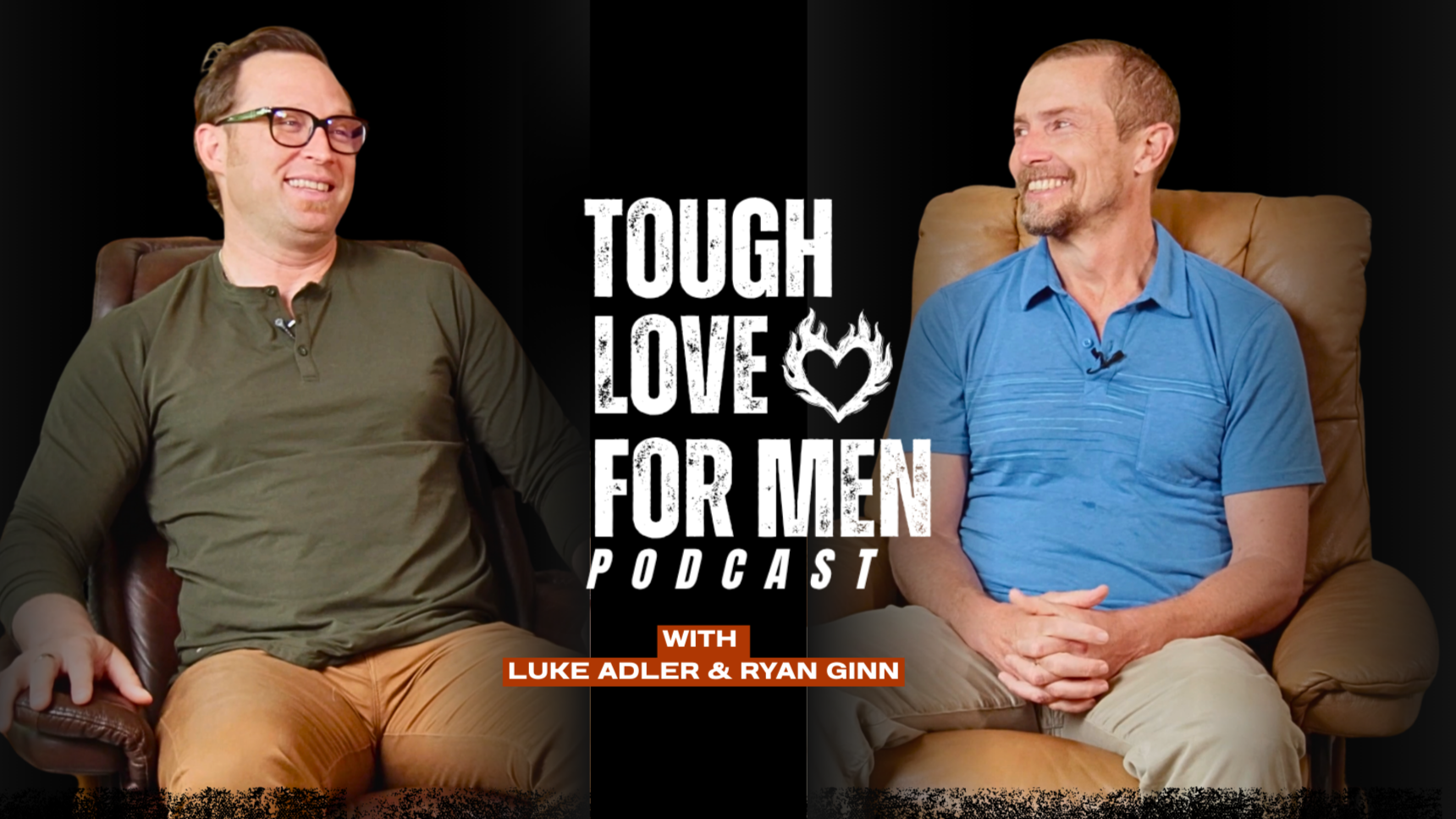
In Episode 57 of Tough Love for Men, Ryan talks with men’s relational health coach Bri Hofmann about what happens when men become disconnected from their emotional aliveness and begin organizing their worth around what they can produce, provide, fix, or endure.
Bri describes a common turning point between childhood and adolescence. Emotional expression, creativity, enchantment, and curiosity begin to narrow. A boy learns to focus on results. He becomes responsible, capable, agreeable, stoic, or successful. Those traits may help him survive and achieve, but they can also leave him unsure of who he is when there is nothing to accomplish.
External Proof Will Never Feel Like Enough
Bri uses the word “proof” to describe what many men spend their lives collecting.
The brain scans for evidence:
Did I make enough money?
Did I work hard enough?
Did I train hard enough?
Does my partner still want me?
Are my children proud of me?
Am I respected?
Am I masculine enough?
Did I solve the problem?
None of these desires are inherently wrong. Work, contribution, physical health, sex, partnership, and respect all matter. The problem begins when they become the only evidence that a man is valuable.
External proof is unstable. Careers change. Relationships go through difficult seasons. Bodies age. Children become independent. A partner cannot offer constant reassurance. Even success can feel strangely empty once the next goal appears.
If a man has no internal relationship with his own worth, every change outside him can feel like a threat to his right to belong.
Bri invites men to begin collecting a different kind of evidence. It is built through small promises kept to yourself.
Say no when you mean no.
Follow through on a commitment you made to yourself.
Eat, sleep, move, and care for your nervous system.
Honor a boundary even when someone is disappointed.
Make room for play, curiosity, pleasure, and rest.
Tell the truth about what you want.
Each action sends a quiet message inward: I matter to me.
Internal trust grows through repetition. It cannot be created through one affirmation or one breakthrough conversation. It develops when your choices consistently demonstrate that you will not abandon yourself to earn connection.
The Fixer Pattern Can Become Resentment
Performance does not stay at work. It follows men into relationships.
A man who learned that his value comes from being useful may become the person who fixes everything. He tries to solve his partner’s distress, decode her emotions, anticipate every possible problem, or keep the relationship calm.
He may have absorbed the idea that being a good husband means being his partner’s rock, regulator, protector, and emotional leader at all times. When she is upset, he works harder. When she criticizes him, he proves, explains, fixes, or takes on more responsibility.
This can look loving from the outside. Inside the relationship, resentment begins to build.
If every difficult emotion becomes another job, his partner’s humanity starts to feel like a demand. He may believe he is responsible for making her okay, while she may learn that he will step in whenever discomfort appears. Both partners become trapped in the same pattern.
One person believes, “I am supposed to fix your problems.”
The other begins to believe, “You are supposed to make me feel better.”
Neither person is necessarily choosing this consciously. They are repeating a dance that once helped each of them feel safe.
Support Without Self Abandonment
A healthy relationship includes emotional support. Partners affect each other’s nervous systems, and learning how to offer comfort is part of intimacy.
Support does not require taking ownership of another adult’s inner world.
There is a meaningful difference between saying, “I care that you are hurting, and I am here with you,” and believing, “I must make this feeling go away before I can be okay.”
Your partner may not need an analysis, a solution, or a strategy. Sometimes she needs to know that her sadness, anger, overwhelm, or uncertainty will not make you disappear. She may want you close without asking you to clean up the emotional mess.
That kind of presence can be especially difficult for a man whose identity is organized around productivity. Another person’s pain may feel contaminating, distracting, or threatening to the part of him that needs life to stay controlled and functional.
Remaining present does not mean absorbing the feeling. It means allowing it to exist without guarding yourself against it or rushing to eliminate it.
You can ask:
“Do you want comfort, help finding a solution, or simply someone to listen?”
“What would help you feel connected to me right now?”
“Is there something you want from me, or do you just want me beside you?”
“I care about what you are feeling, even if I cannot fix it.”
Presence becomes possible when you trust that discomfort is not the end of you.
Self Soothing and Reaching for Connection
Ryan and Bri also explore a paradox inside healthy relationships: you need the capacity to care for yourself, and you need the capacity to reach for other people.
Some people move toward connection immediately when they are distressed. Others withdraw, meditate, exercise, work, or find another way to regain control before they speak. Neither response is automatically healthier.
Problems arise at the extremes.
If your partner is your only source of regulation, every missed call, distracted response, or moment of unavailability can feel like abandonment. The relationship carries more emotional weight than any one person can sustainably hold.
If self-reliance becomes your only strategy, no one is allowed to know you when you are struggling. You may appear steady while becoming increasingly isolated.
A resilient relationship makes room for both.
You learn how to soothe your own nervous system without pretending you never need anyone. You learn how to ask for ten minutes of listening, a hug, reassurance, or witness without making your partner responsible for rescuing you.
Partners can teach each other. A person who naturally reaches for connection can help a self-reliant partner practice asking. A person with strong self-soothing skills can model that temporary aloneness does not have to mean rejection.
The goal is not perfect independence or constant togetherness. It is flexibility.
Your Pattern Is Not Your Identity
Bri’s Pattern Assessment describes four common ways people learn to find love, avoid rejection, or stay emotionally safe.
The Lost Boy traded wonder for acceptance and became responsible, productive, agreeable, or stoic.
The Shape Shifter learned to read the room, change himself, soften his opinions, and ignore his needs to preserve connection.
The Performer learned to earn acceptance by being useful, successful, capable, and easy to love.
The Hollow One learned to search outside himself for the love, approval, excitement, certainty, or achievement that might finally fill an old emotional emptiness.
You may recognize yourself in more than one pattern. That is expected. No short assessment can capture the complexity of a person, and none of these patterns should become another label you use against yourself.
A pattern is a learned response, not a permanent identity.
Recognition gives you a moment of choice. You can notice the urge to perform, disappear, fix, seek proof, or make another person responsible for your inner state. Then you can ask what the pattern is trying to protect and whether the old response still serves the life you want.
Change begins before crisis when you become curious about the pattern instead of waiting for pain to make it impossible to ignore.
About Bri Hofmann
Bri Hofmann is a men’s relational health coach who helps men recognize the patterns shaping their emotional lives and relationships. Her background includes emergency medical work in Denver and coaching as a doula, both of which placed her inside high-stakes moments of human vulnerability.
After her husband died by suicide in 2021 while she was pregnant, Bri became deeply committed to understanding the forces that leave men disconnected from themselves and the people who love them. Her work centers self-connection, nervous-system awareness, honest pattern recognition, and practical action.
Key Takeaway
You cannot build a connected relationship by repeatedly abandoning yourself.
Your achievements, usefulness, and ability to stay strong may be meaningful parts of who you are. They cannot carry the full weight of your worth.
The work is to reconnect with the person underneath the performance, build evidence that you matter through the way you treat yourself, and learn to support the people you love without becoming responsible for their entire emotional world.
Listen to Episode 57 of the Tough Love for Men podcast for Ryan’s full conversation with Bri Hofmann about performance, external proof, resentment, emotional responsibility, self-soothing, and the patterns that quietly shape men’s relationships.
Connect with Bri Hofmann
Pattern Assessment Tool: Take the Pattern Assessment
Website: Visit Bri Hofmann’s website
Instagram: Follow @brihofmann.coach
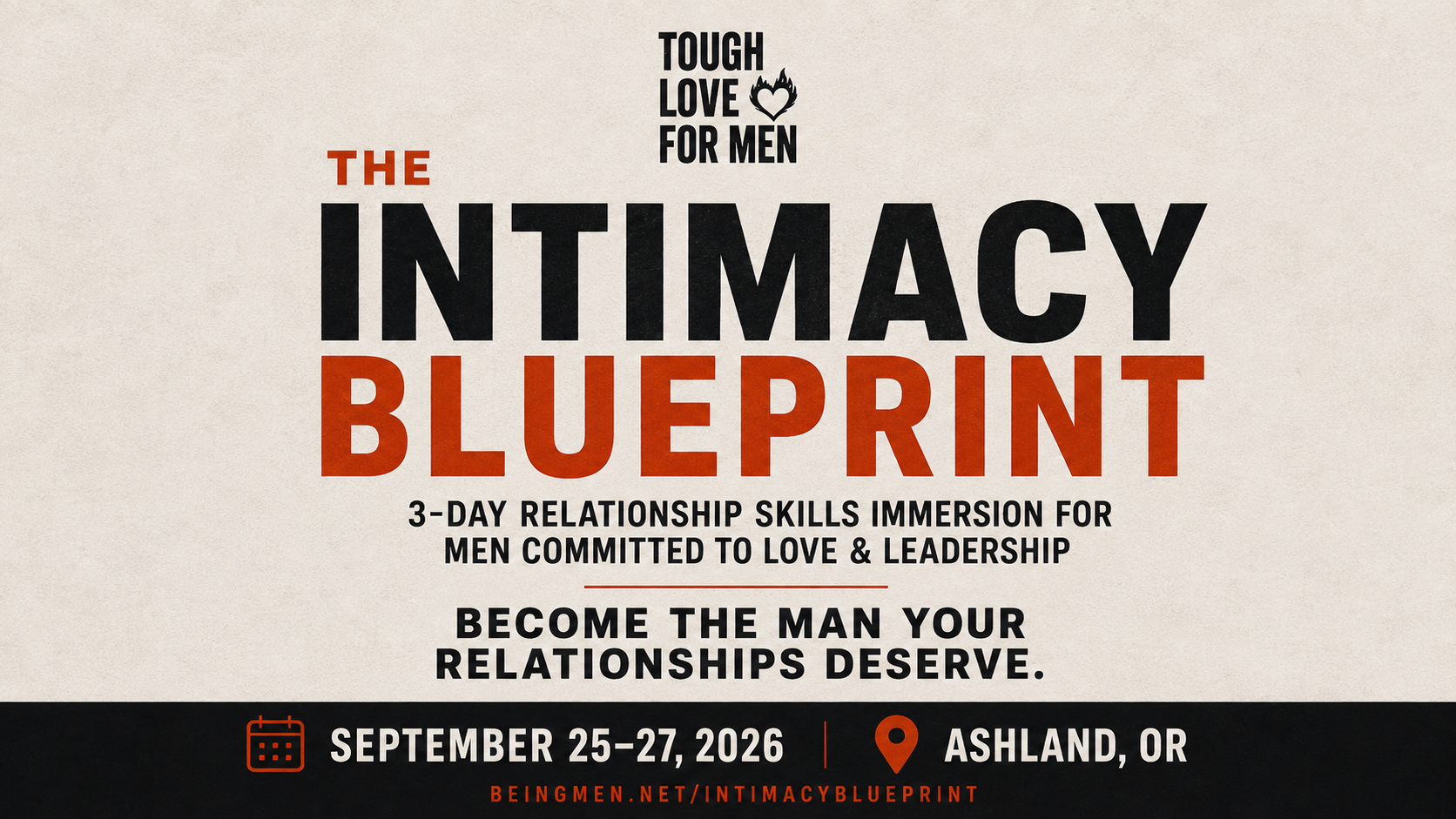
Join Us at the Intimacy Blueprint Men’s Retreat — Ashland, Oregon
Dates: Sep 25, 2026–Sep 27, 2026https://www.beingmen.net/intimacyblueprint