
The Relationship Dynamic That Looks Like Leadership, But Feels Like Control.
A lot of men want to lead better in their relationships.
They want to be more present.
More emotionally aware.
More capable during hard conversations.
That’s a good thing.
But there’s a pattern that can sneak in when you start trying to become the “better” partner.
You become the one who knows.
You know what’s happening.
You know what your partner is doing.
You know what the relationship needs.
You know how the conversation should go.
And without realizing it, you move into the one-up position.
Your partner ends up in the one-down position.
That dynamic may look like leadership on the surface, but it often feels like control on the receiving end.
The One-Up Role Can Be Subtle
The one-up role does not always look aggressive.
Sometimes it sounds calm.
Sometimes it sounds spiritual.
Sometimes it sounds like advice.
Sometimes it sounds like, “I’m just trying to help.”
But underneath it, the message can become:
“I see this more clearly than you.”
“I know what needs to happen.”
“Your reaction is the problem.”
“Let me guide you into the right response.”
That does not create safety.
It creates hierarchy.
And intimacy cannot fully grow in a hierarchy.
Your Partner Needs Room to Come Forward
When one person becomes the guide, the teacher, or the emotional authority, the other person often has to shrink.
Their feelings become something to explain away.
Their pain becomes something to correct.
Their anger becomes something to manage.
But a relationship needs space for both people to come forward.
That means your partner gets to have their own reality without you immediately organizing it, correcting it, or translating it into what you think it means.
This is where real connection begins.
Not when you have the perfect answer.
When your partner feels met.
Leadership Is Not Domination
Healthy leadership in a relationship is not about being above your partner.
It is not about knowing more, seeing more, or staying more regulated so you can quietly feel superior.
Real leadership is relational.
It asks:
Can I stay connected while my partner is having an experience I do not fully understand?
Can I listen without needing to become the authority?
Can I be honest without making my partner smaller?
Can I lead with care instead of control?
That kind of leadership creates trust.
The Work Is Mutuality
A strong relationship is not built by one person dragging the other into growth.
It is built when both people have room to be honest, messy, human, and evolving.
That requires humility.
It requires noticing when your “help” has become pressure.
It requires asking yourself whether you are protecting the connection or protecting your position.
Because sometimes the most powerful move is not teaching, fixing, or explaining.
Sometimes the move is softening.
Pausing.
Listening.
Letting your partner matter as much as your perspective.
Key Takeaway
If you always feel like the one who knows what needs to happen, it may be time to look closer.
You may not be leading the relationship.
You may be standing above it.
The invitation is to step back into mutuality, where both people have room to grow, feel, speak, repair, and come forward.
That is where real intimacy becomes possible.
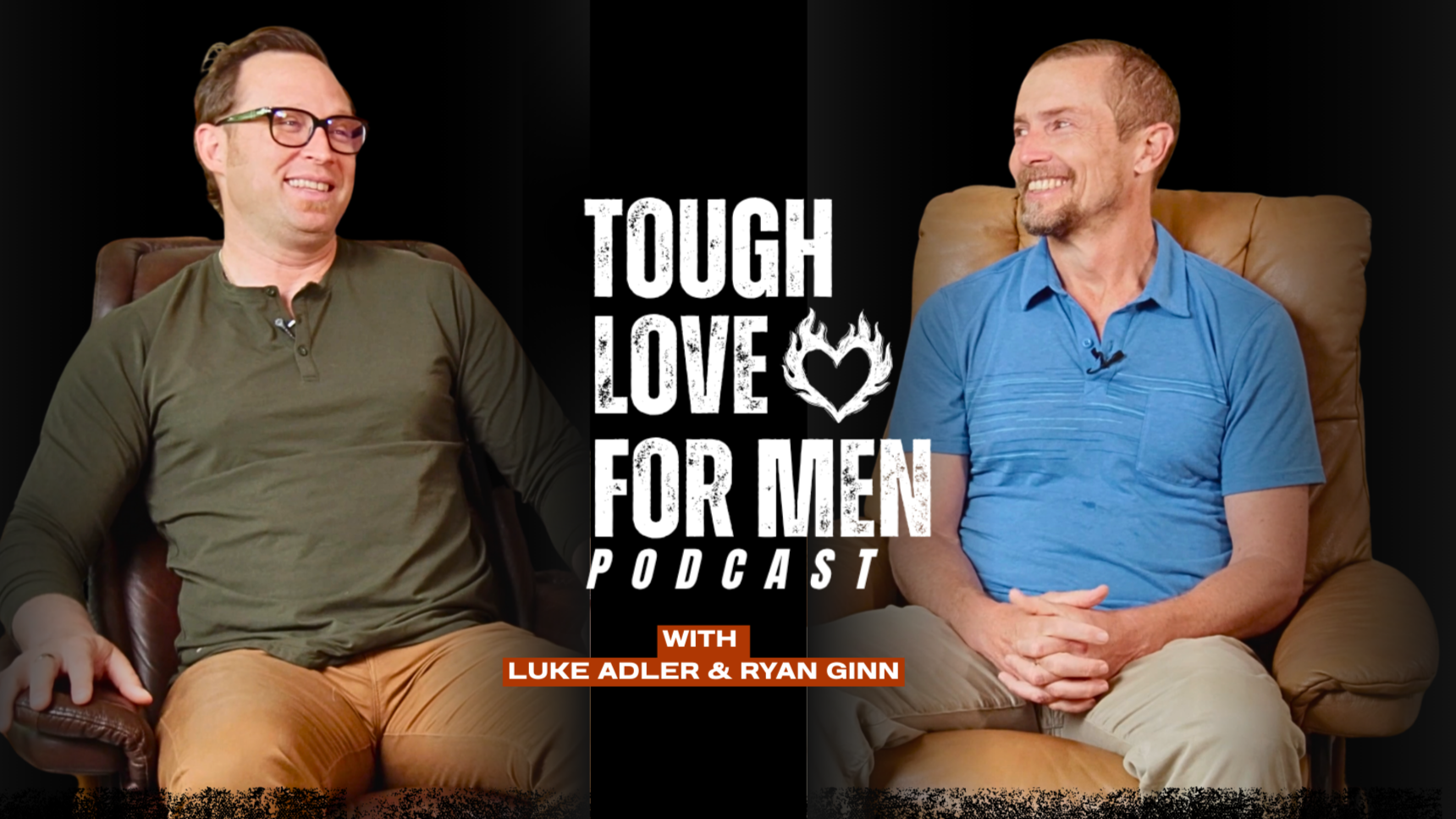
🎧 Listen to this episode of the Tough Love for Men podcast for a deeper conversation about the one-up / one-down dynamic, emotional safety, grief, control, and what it means to lead from beside your partner instead of above them.
Want to go deeper with Luke Adler and Ryan Ginn?
Take the free masterclass here:
4 Hard Truths That Will Transform Your Relationships